What Are the Signs of a Bad Axle?
Axles connect wheels to deliver a safe, coordinated ride at all times. They manage steering and braking force. Car axles deliver engine power that balances weight and maintains relative wheel positioning. But, things like car shocks, age and road salt can slowly hurt them.
An understanding of axle performance ensures you have structural integrity, weight support, and sound steering and suspension support. Knowing what are the signs of a bad axle is key to safe driving and improving your vehicle's lifespan.
What are the signs of a Bad Axle? Here are the most common signs that indicate an axle is going bad.
- Vibrations: When you experience wobbling or shaking that intensifies with speed, you may be looking at worn outer joints affecting stabilization.
- Clicking noises: Distinct noises and popping sounds indicate a bad axle. The defect is mostly evident in sharp turns.
- Leaks on inner tire: If CV boots rip, grease escapes. Dirt and moisture can get into components. The whole magilla leaves grease splatters on the suspension or inner rim of your wheels.
- Acceleration/deceleration clunking: Loud thuds and knocks when accelerating or going from park to drive indicate damage in the axle.
- Vehicle won't move: Once an axle's done, the vehicle won't move because power's not getting to the wheels.
Conclusion
Axles are usually replaced in pairs. One failing means its opposite is on its way out. It's highly recommended that you follow the practice to ensure both sides of the car are parallel. Damage to your axle can result from damaged boots and hitting the curb, as well as hazardous environmental conditions. Be aware of the impact of car shocks or ignoring unexplained sounds.
You have to keep an eye out for what are the signs of a bad axle. Otherwise, you increase damage that's avoidable and costly. When it comes to safe driving, always err on the side of caution and get your axles checked if you even suspect a problem.
Still, wondering what are the signs of a bad axle? Contact our ASE Certified Technicians at Gary’s Quality Automotive for more information about car shocks and to schedule an appointment. Our auto shop proudly serves vehicle owners in Grand Island, NE, Wood River, NE, and Doniphan, NE.
About the Author

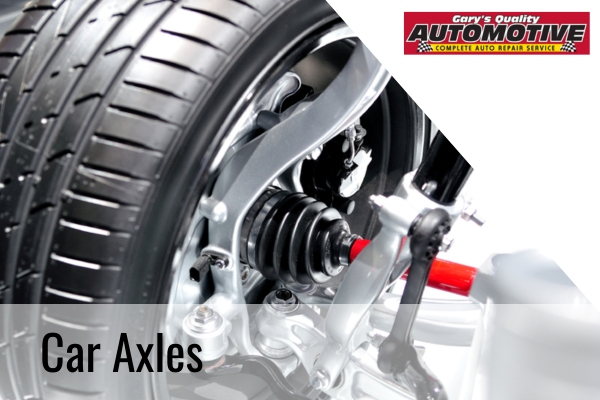
Axles connect wheels to deliver a safe, coordinated ride at all times. They manage steering and braking force. Car axles deliver engine power that balances weight and maintains relative wheel positioning. But, things like car shocks, age and road salt can slowly hurt them.
An understanding of axle performance ensures you have structural integrity, weight support, and sound steering and suspension support. Knowing what are the signs of a bad axle is key to safe driving and improving your vehicle's lifespan.
What are the signs of a Bad Axle? Here are the most common signs that indicate an axle is going bad.
- Vibrations: When you experience wobbling or shaking that intensifies with speed, you may be looking at worn outer joints affecting stabilization.
- Clicking noises: Distinct noises and popping sounds indicate a bad axle. The defect is mostly evident in sharp turns.
- Leaks on inner tire: If CV boots rip, grease escapes. Dirt and moisture can get into components. The whole magilla leaves grease splatters on the suspension or inner rim of your wheels.
- Acceleration/deceleration clunking: Loud thuds and knocks when accelerating or going from park to drive indicate damage in the axle.
- Vehicle won't move: Once an axle's done, the vehicle won't move because power's not getting to the wheels.
Conclusion
Axles are usually replaced in pairs. One failing means its opposite is on its way out. It's highly recommended that you follow the practice to ensure both sides of the car are parallel. Damage to your axle can result from damaged boots and hitting the curb, as well as hazardous environmental conditions. Be aware of the impact of car shocks or ignoring unexplained sounds.
You have to keep an eye out for what are the signs of a bad axle. Otherwise, you increase damage that's avoidable and costly. When it comes to safe driving, always err on the side of caution and get your axles checked if you even suspect a problem.
Still, wondering what are the signs of a bad axle? Contact our ASE Certified Technicians at Gary’s Quality Automotive for more information about car shocks and to schedule an appointment. Our auto shop proudly serves vehicle owners in Grand Island, NE, Wood River, NE, and Doniphan, NE.
About the Author